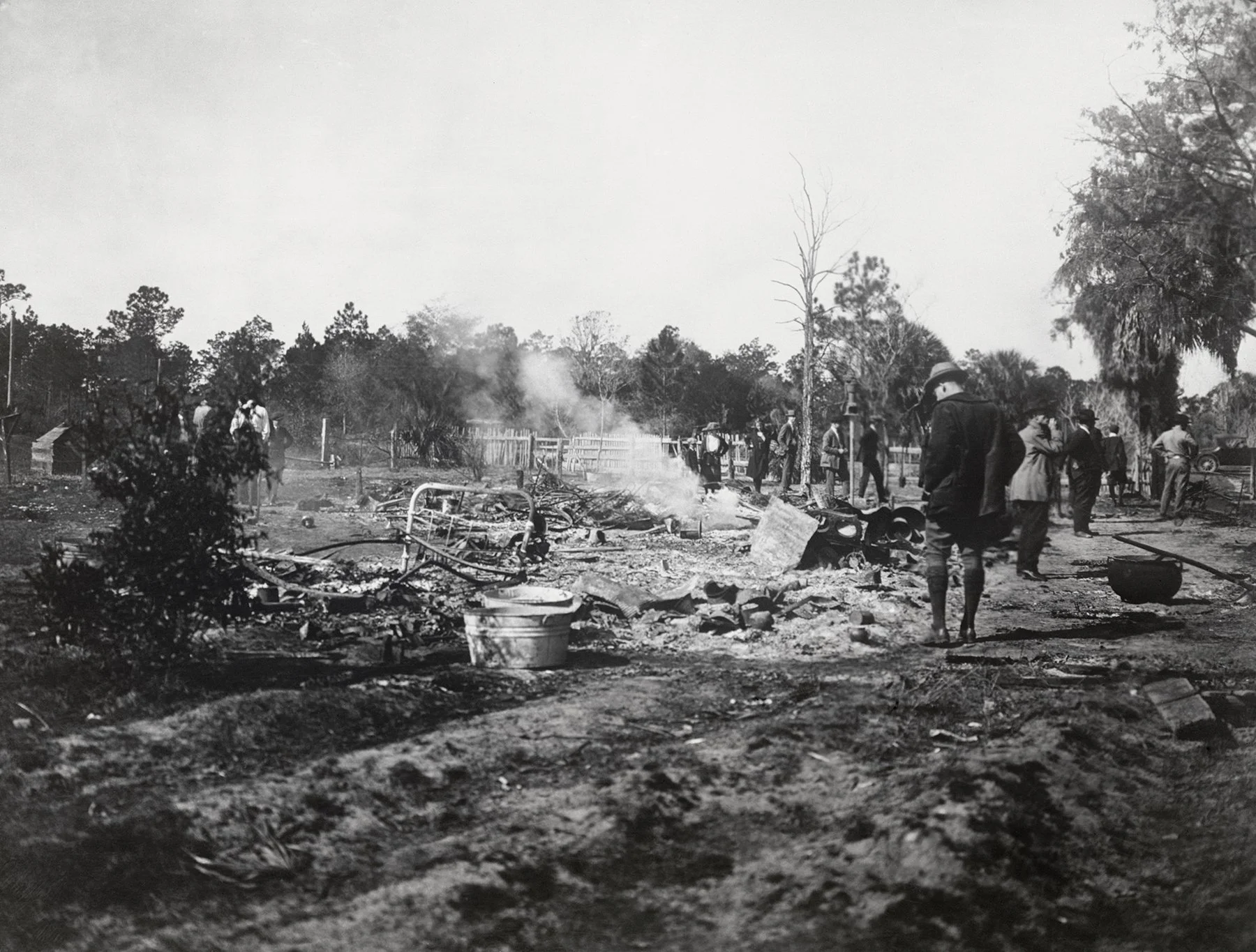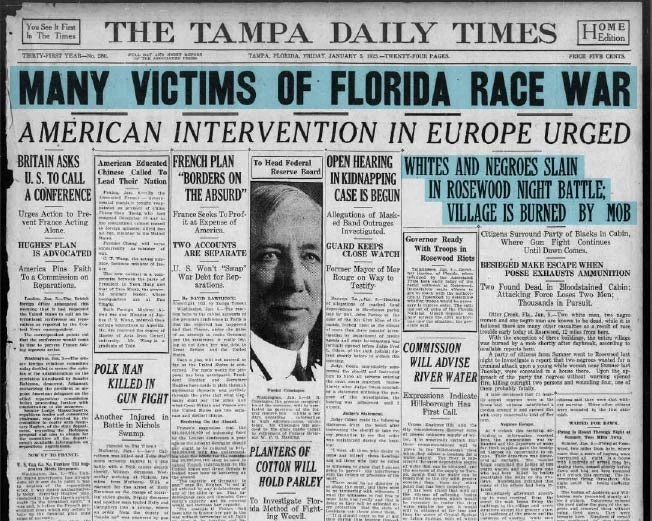
The Rosewood Massacre.
January 1923. Rosewood, Florida.
The town of Rosewood, Florida had been a thriving and sustainable Black community since the late 1800s, complete with successful businesses, two churches, and even a baseball team. That all changed in early January, 1923.
On January 1, a local white woman living in the nearby town of Sumner claimed she had been assaulted by a Black man in her home. The Levy County sheriff determined that Jesse Hunter, a recent and nearby chain gang escapee, must be the culprit, despite having no evidence tying him to the victim. They connected Hunter to Aaron Carrier and Sam Carter, which led the mob to Rosewood. While Carrier was placed in protective custody, Sam Carter was lynched and shot multiple times. The violence would continue through the week, taking more lives of the Black residents of Rosewood.
Those who survived the physical assault did so by taking shelter in the nearby woods and swamps for several days. When they emerged, they boarded trains bound for other parts of Florida, leaving Rosewood forever.
The true history of Rosewood was only bought to the public eye in the 1990s, when the state of Florida launched an official inquiry into the events and ultimately led to the passing of House Bill 591 in 1994. This landmark legislation provided $2.1 million in reparations to the survivors and descendants of the 1923 Rosewood Massacre.