
In 1912, a white supremacist mob violently expelled the 2,000 Black residents of Forsyth County, Georgia. It remained segregated until the 1980s.
The Forsyth County Expulsion
September 1912. Forsyth County, GA.
Today, Forsyth County is an affluent suburb of Atlanta. But in 1912 it was the site of an outburst of racial tension. It was hidden for decades, never being spoken of above a whisper, until brought to light in the 1980s.
In September 1912, Mae Crow, a young white woman, was found beaten and sexually assaulted in the woods near her home. She was found unconscious and died before she could identify her attacker. However, 24-year old Rob Edwards and two Black teenagers were arrested on suspicion of involvement. A mob of 2,000 white men stormed the jail on September 10, dragged him from his cell, brutally beat him with a crowbar, and shot him multiple times. His body was then dragged to the town square where he was strung up and left on display. The two teenagers were given a sham one-day trial and sentenced to death. Their hanging became a public spectacle, drawing thousands out to witness their murder.
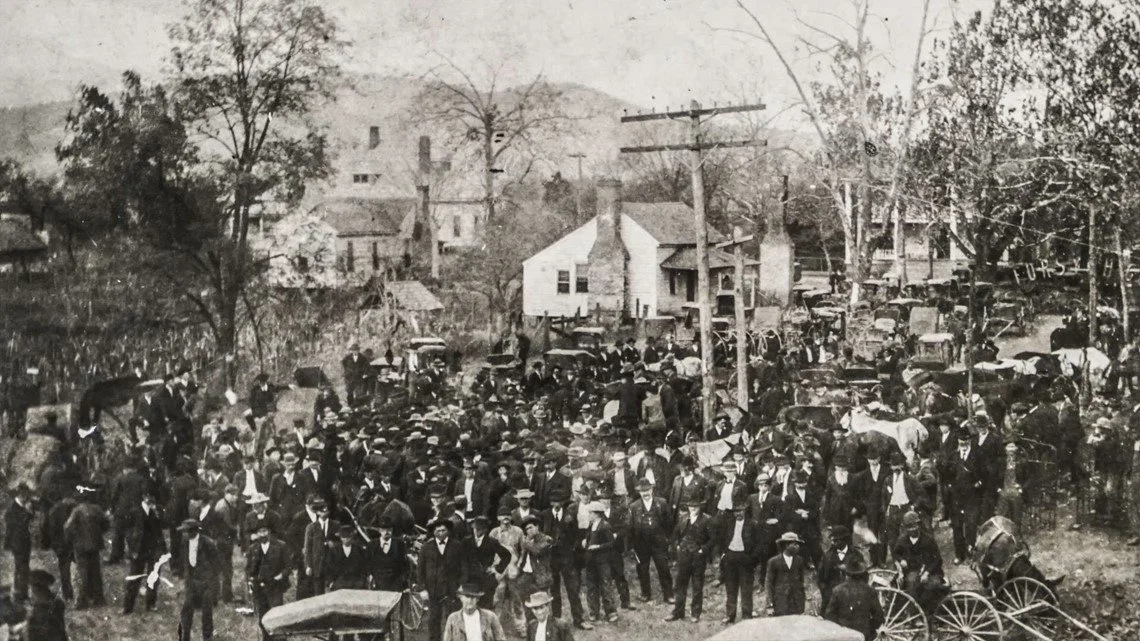
White supremacists in Forsyth used the attack on Mae Crow to whip other white residents into a violent frenzy, resulting in weeks of terror perpetuated against the Black residents of the county. Night riders swept through the area, stealing and murdering livestock, setting off sticks of dynamite and leaving threatening messages posted on doors. Under this threat, all of Forsyth County's Black residents, approximately 1100 people, fled the area. They left behind their homes, land, churches, and burial grounds. Forsyth County stayed all white until the 1980s.
In 1987, civil rights groups out of Atlanta held rallies and attempted a march to the county seat in Cumming to bring attention to this example of extreme racism that persisted in the South. They were met with white supremacist mobs and members of the Klan, who harassed and assaulted protesters. But the clash made national news, and slowly, the county re-integrated.
Black descendants of the 1912 expulsion are still here, and continue to tell their stories, paying homage to their ancestors whose farmland, homes, and lives were stolen.